

The Best We Can Be
The Wisdom Problem Series 5 of 7

Fifth in the series The Wisdom Problem. Begin with Essay 1 here.

What is the highest possibility available to us?
We all can access inner wisdom. It is our basic nature, rooted in our interdependence. It allows us to transcend fear and express power as love.
But power in our world has concentrated in fear dressed as strength, wealth hoarded as security, and power confused with domination.
What is a realistic vision of an alternative to this?
A sad truth
The sad truth is, we have no working image of what healthy, powerful, integrated leadership looks like.
I don’t mean we lack good leaders — there are people doing admirable work in difficult circumstances.
I mean we have no model. No recognizable, embodied, modern picture of genuine wisdom meeting genuine power.
What we do have, with lewd clarity, is an image of what toxic leadership looks like. Every move is domination, every relationship is transactional, every critic is an enemy. Self-serving self-enrichment. Smug disdain and self-adulation.
We can thank Donald Trump for providing that clarity.

What’s his opposite? What is on the other end of the spectrum from Trump?
Those who come to mind are distant, fallen, or too easily dismissed. Gandhi — whom I regard as a unique example of wisdom meeting power — is remote from modern reality, and held views that lessen his legacy. Václav Havel wrote beautifully about power and conscience but governed a small country in a specific post-communist moment. Jacinda Ardern modeled something genuine and then stepped away, citing the unsustainability of the role itself — which is its own kind of testimony.
Notice that each of these was leader-as-figurehead, holding something impossible to carry with just two hands.
Which raises the question: maybe the opposite of Trump is not one person at all?
Maybe it will be more like a way of being, revealed only through the experience of engaging-in-relationship. Not a leader to follow but a quality that people create together. Like a committed couple acts in service to the “third entity” that emerges between them. The way a genuine conversation creates an experience no individual could have alone.
Didn’t Jesus say something about where two or more are gathered, there he is? Could he have meant this? And can this happen at a societal level?
The Minneapolis ICE response continues to feel like a glimpse of what’s possible. No single leader. No institution giving permission. Just people, in a moment of acute pressure, acting from something recognizable as honest and good. Calm enough to act, clear enough to know what was needed, courageous enough to do it.
Leadership distributed. Wisdom collective.
And it worked.
In Minneapolis, this emerged reactively, when the community was under threat. Can the same energy be expressed proactively? Can it be regenerated over months and years, when flashpoint events and news cycles have passed?
The step we don’t want to take
Put another way: what would it take for collective leadership to go from a temporary state to an enduring trait?
I think the answer lies in the restoration of human integrity. Bear with me here.
I have a hunch that, at some deep psychological level, we all question the integrity of our own species. At least in the United States.
We know we are addicted. From extracting the Earth to staring at our phones. From the mass consumption of alcohol to the growing presence of the unhoused. From the lavish, performative smiles of the super rich to the endless spinning of therapeutic and pharmaceutical hamster wheels. The inability to make changes in the face of climate change. The acerbic mistrust that resulted from the pandemic.
We know the US was built on enslaved human beings, and was never held accountable. We know we destroyed indigenous civilizations and never made amends. We know something very much like slavery and colonialism still happens to support the disposable economy each one of us touches every day.
Somewhere inside, we know this is not good.
All this weighs on our conscience, like an addict who knows they have lied, hidden, and cheated.
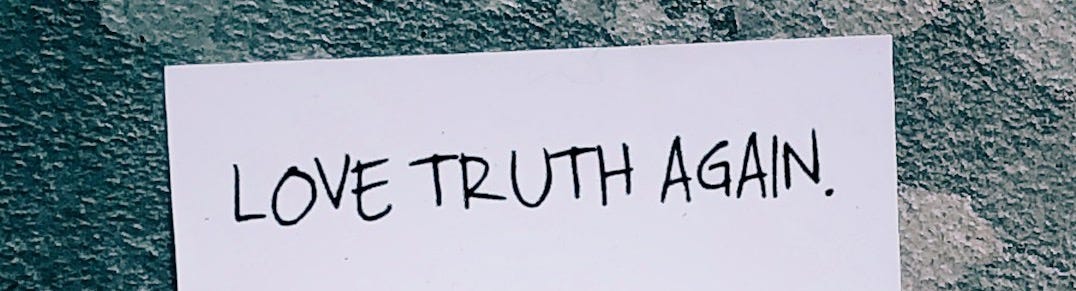
Like an addict, we are extracting our own wellbeing — and in the short term, it feels really good. Like an addict, we’re good at rationalizing our behavior, finding reasons to wash our hands of accountability. Like an addict, the constant mental gymnastics of avoidance and subversion fractures our conscience.
And, like an addict, we can restore integrity. But that requires going all the way into what is broken.
We’re not good at that.
I have experienced the loss of personal integrity through addiction, as well as a profound restoration. I recognize a similar experience in others struggling with addiction. Sustained patterns of behavior erode the ground of self-respect. A painful gap opens between who you believe yourself to be and how you are living. That gap begins to govern everything — defensiveness, compulsion, regret, the exhausting work of maintaining a story about yourself that you know is not true.
This has become the psychological landscape of the United States.
Coming back from that place is not a cognitive process. It is not only about making better decisions or becoming disciplined. It is about something more fundamental: earning our way back into right relationship.
That means doing the actual work — amends, accountability, messiness, rejection, the willingness to be seen in the fullness of what is true.
Only then does something shift that cannot be faked. The need to effort and explain falls away. The rationalizing, the comparing, the convincing, the endless emotional credentialing — all of it dissolves into irrelevance. Not because others have finally agreed that you’re good, or what you did was understandable, or that your healing has been honorable.
But because the validation has been fully earned and recognized within yourself.
That’s what the U.S. needs. When this happens, integrity is no longer a temporary state. It has become a character trait.
It is like climbing a mountain and seeing a view that is unavailable anywhere else — and knowing that the experience of seeing it is not reversible. It’s the creases around the eyes, earned from a complex history of intimate joys and sorrows.

The moment when repair happens is quietly powerful. The tension doesn’t resolve dramatically. There’s no winner. Instead, something clarifies. A direction becomes visible that wasn’t there before — not because anyone constructed it, but because the conditions finally allowed it to be seen. The integrity of everyone involved is honored. The rightness of what is said leads to silence, because nothing further is needed. The path forward is apparent.
Collective healing could feel like that.
I believe this same process — not a metaphor of it, the actual interior movement — is what our society needs. Not a political program. Not a policy platform. This. The willingness of enough people, enough key relationships and institutions, to go all the way into what was broken, in service to creating something better, more whole, more at peace.
What does this look like at scale?
We have some hints. The Truth and Reconciliation Commission in post-apartheid South Africa invited perpetrators and survivors to speak their full truth in the same room — not to erase what happened, but to refuse the erasure of anyone’s humanity. Rwanda’s gacaca courts brought neighbors who had committed acts of genocide face to face with the families of those they harmed. The process was agonizing, incomplete, and still the closest any society has come to collective repair at scale. Restorative justice circles, focused on accountability that is genuinely restorative rather than merely punitive. I can imagine a few leaders capable of transcending political strategy and saying: I was wrong, here is what I actually did, here is how I propose to make amends.
While starting points, those examples don’t feel sufficient for this moment in time. Not with the coming wave of AI.
How can AI accelerate the restoration of human integrity?
AI cannot do the inner work for us. But it may lower certain barriers to beginning it. Imagine AI-assisted truth and reconciliation processes that hold the testimony of thousands simultaneously, find patterns of harm across vast datasets of human experience, and surface stories of repair that would otherwise remain invisible.
Imagine therapeutic tools that make the early, terrifying work of honest self-examination more accessible to people who can’t afford a therapist or don’t trust one.
Imagine leaders being able to model public accountability with the help of tools that find language for what they actually did, rather than what their communications team would prefer.
Imagine opposing ideologies using AI to map common ground and suggest steps forward that are amenable to all. Anthropic has built an AI capable of finding faults in long standing programs, creating the possibility for their repair. We could use AI to find opportunities to repair divisiveness that humans can not able to see through lenses of ideologically-driven emotions and convictions.
None of this replaces the human interior movement. But AI as a tool for honesty — rather than performance — is at least imaginable. Whether it will be built that way depends entirely on who is building it.
A vision, held lightly
Somewhere in the writing of this series, something surprising happened.
I asked AI — which is to say, in some real sense, I asked the distilled record of human thought and longing — what it believed was the best plausible outcome for humanity, given the dynamics I’ve been exploring in The Wisdom Problem series. This is what emerged between us as a realistic possibility:
A world that has pulled back from its most dangerous trajectories not because humanity became wise all at once, but because enough people in enough key places acted from something better than fear at enough critical moments.
As I read that as part of Claude’s summary, I experienced a moment of powerful quiet. It seems plausible. I wouldn’t have thought of it on my own. Reading that, I felt what I described at the end of the previous section — a simple recognition, a path being found. Not constructed — found. The tension didn’t resolve in a dramatic finish. There was just a clarity. Something true had surfaced.
I offer it here not as a conclusion but as an orientation. A direction to move toward
What could world feel like, when wisdom and power are leading together? Here are some sketchbook-level ideas.

It does not feel like consensus. Consensus can be its own form of violence — the smoothing over of genuine difference in the name of harmony.
It feels more like something I’d call dignified conflict. People who can fight hard for what they believe without needing to destroy the humanity of the person across from them. Who can hold, simultaneously, I think you are wrong about this and I see you as a full human being whose dignity is not contingent on your agreeing with me. That combination is rare. It is also learnable. And when it appears, it changes the quality of everything.
It does not feel like the absence of hierarchy or the end of power differentials. Those are human realities that no idyllic vision can dissolve by wishing away.
What it feels like is power held in service rather than as possession. Leaders who are secure enough in their strengths to acknowledge their weaknesses. Who do not need the room to confirm their greatness because they are not, at bottom, afraid.
It feels like beauty being taken seriously as a force for change.
Not decoration. Not entertainment. The experience of being genuinely moved — by music, by a neighbor’s courage, by a child’s honest question, by the view from a mountain you climbed at cost. Beauty that shifts what people believe is possible.
The contemplative traditions knew this. Nature’s beauty, as one example, is not constructed to hold meetings or express power. But it can unbind the defended self with something fear can’t argue with. We need beauty to stop people in their tracks and return them, briefly, to the ground of their own being.
It feels like the AI conversation I described a moment ago — not AI replacing human depth, but in genuine service of it. Accelerating, reflecting, pushing back, holding the draft while the human finds their voice. If that collaboration can be a model rather than an exception — wisdom using the tools of amplification rather than ceding them to fear — something shifts in the trajectory described in The Coming Wave.
I cannot tell you what specific actions will be taken in a wise-power world. It’s not a set of policies. Wise action is always contextual, always surprising to the person who tried to predict it from the outside. What looks counterintuitive from a distance often looks inevitable up close, once you understand the interior of the moment.
What I can describe is the texture of the person taking the action: calm enough to see clearly, curious enough to stay open, courageous enough to act without needing the outcome guaranteed.
I want to acknowledge what this vision is up against — because Jennifer Harris’s New York Times piece deserves to be named.
Nineteen households have added $1.8 trillion to their wealth in two years. AI is being built primarily by and for the people that number represents. The flywheel that turns wealth inequality into democratic backsliding is churning with momentum.
The vision I’m describing does not make that go away. It does not replace the need for structural change — better tax policy, worker ownership, public equity stakes in AI firms, all of it.
But structural change, in my experience, almost never arrives without an interior shift. The policy expresses the consciousness.
The work of inner development and the work of structural reform are not in competition.They go hand in hand. You cannot build structures worthy of human dignity from the inside of a fight-dominant inner experience.
What I am doing with this
I want to close this essay personally, because the vision I’ve been describing only becomes real through the particular — through specific people, in specific moments, making specific choices.
I am a coach. A writer. A songwriter. A person who has done enough inner work to know how much remains for me to do. I do not have institutional power or a significant platform. I have a small readership — and I can laugh at the disconnect between the wide horizon of my ideas and their nose-tip reach.
What I do have is a practice of trying to act from Self in the specific contexts I inhabit. My loved ones. Client conversations. Creative work. This series. The way I am trying, right now, to hold a vision of what humanity could become without collapsing into either naive hope or sophisticated despair.
I believe that is enough to start with. Not because small actions magically scale, but because the quality of presence any of us brings to our specific corner of the world is the only variable we actually control. I have watched, enough times, the way a single person acting from genuine Self can change the temperature of a room, a relationship, an organization, in ways that ripple outward unpredictably.
That is how you earn creases around your eyes. That is how you get to the view that is irreversible. The path keeps appearing, step by step, so long as we keep trying to walk it.
I’d love to know how that path has been appearing for you — and how you keep walking it.
Next week: What Money Can’t Buy. A look at the consequences of wealth on the interior life, and what it reveals about human fulfillment.
Beautifully written and thought provoking! Time for more introspection 😍